


Tooth Extractions in Campbell, CA: A Patient's Guide
Tooth extractions in Campbell, California, are sometimes the best path to protect oral health when a tooth is too damaged to save. This educational guide from Kirkwood Dental outlines when removal is recommended, how the procedure works, and what recovery involves for patients.
Tooth Extractions Explained
A tooth extraction is the removal of a tooth from the jawbone socket. Our dentist may recommend removal when a tooth cannot be predictably restored or when keeping it would harm surrounding tissues. Common reasons include deep decay, cracks below the gumline, advanced gum disease, failed root canal treatment, orthodontic crowding, and impacted wisdom teeth removal.
There are two main types of removal. A simple extraction removes a tooth that is visible above the gums using instruments that gently loosen and lift the tooth. A surgical extraction is used for broken, impacted, or severely decayed teeth and may involve a small incision in the gum, careful bone removal, and stitches. Both approaches use local anesthesia to numb the area, and comfort options can be discussed beforehand.
Benefits of Tooth Extraction
- Stops ongoing pain from severe decay, infection, or fracture.
- Prevents the spread of infection to neighboring teeth and bone.
- Protects gums and supports long-term oral health.
- Creates space for orthodontic treatment when crowding is present.
- Prepares the mouth for future tooth replacement such as implants, bridges, or dentures.
How a Tooth Extraction Works
Evaluation and Planning
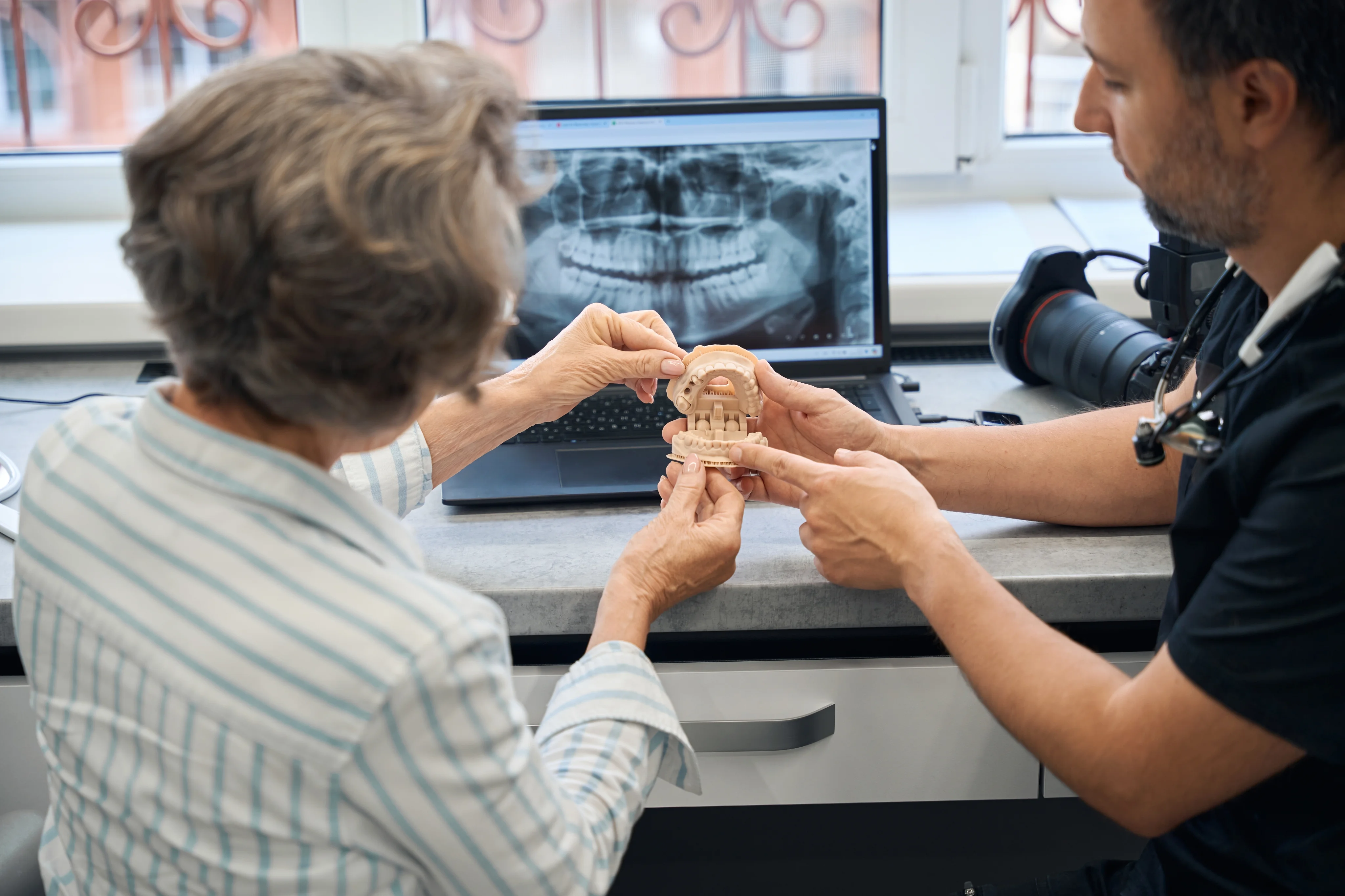
The visit starts with a clinical exam, a review of medical history, and dental X-rays. X-rays show the tooth roots, nearby nerves, and bone levels, which help determine whether the procedure will be simple or surgical. This is the time to discuss medications, allergies, and any past reactions to anesthesia.
During the Procedure
The area is fully numbed. For a simple extraction, the tooth is loosened with an elevator and removed with forceps. For a surgical extraction, a small incision may be made, and the tooth may be sectioned into pieces for easier removal. The site is rinsed, and stitches may be placed. Gauze is applied so a protective blood clot can form.
After the Extraction
Most patients feel pressure during the procedure but not sharp pain. Numbness typically lasts a few hours. Mild swelling and soreness are common for one to three days and improve with recommended care.
What to Expect During Recovery
Recovery after tooth extraction usually follows a predictable timeline. The first 24 hours focus on clot formation and bleeding control. Swelling peaks around 48 hours and then starts to subside. Many patients return to normal activities within two to three days, while surgical sites may need about a week to feel comfortable.
- Bite on gauze for 30–45 minutes to control bleeding, then replace as instructed.
- Use an ice pack on and off for the first day to limit swelling.
- Take recommended pain relief as directed.
- Eat soft foods and avoid straws, spitting, and smoking to protect the clot.
- Rinse gently with warm salt water after 24 hours to keep the area clean.
- Avoid hard, crunchy, or spicy foods until comfort improves.
Questions About Tooth Extractions?
Call if bleeding does not slow after several hours, if pain worsens after day two, or if you notice fever, swelling that increases, or signs of infection. For questions, contact Kirkwood Dental at 408-378-8500 to schedule with Dr. Vinh T. Pham.
Frequently Asked Questions About Tooth Extractions
- Local anesthesia numbs the area so you should not feel sharp pain. You may feel pressure. Soreness afterward is common and usually managed with over-the-counter medication.
- Soft tissue closure often occurs within one to two weeks. Bone reshaping and full healing continue for several months. Surgical extractions may require a few extra days of initial recovery.
- Dry socket happens when the clot dissolves or is dislodged, exposing bone. Avoid smoking, straws, and vigorous rinsing for the first day, and follow all home-care instructions.
- Start with soft foods like yogurt, eggs, and soups. Add more texture as comfort allows, usually after a day or two. Avoid hard, crunchy, and spicy foods early on.
- Not always. Removal is recommended when there is pain, recurrent infection, cysts, damage to nearby teeth, or lack of space. Monitoring is appropriate when wisdom teeth are healthy and functional.
- Call if bleeding does not slow after several hours, if pain worsens after day two, or if you notice fever, swelling that increases, or signs of infection.